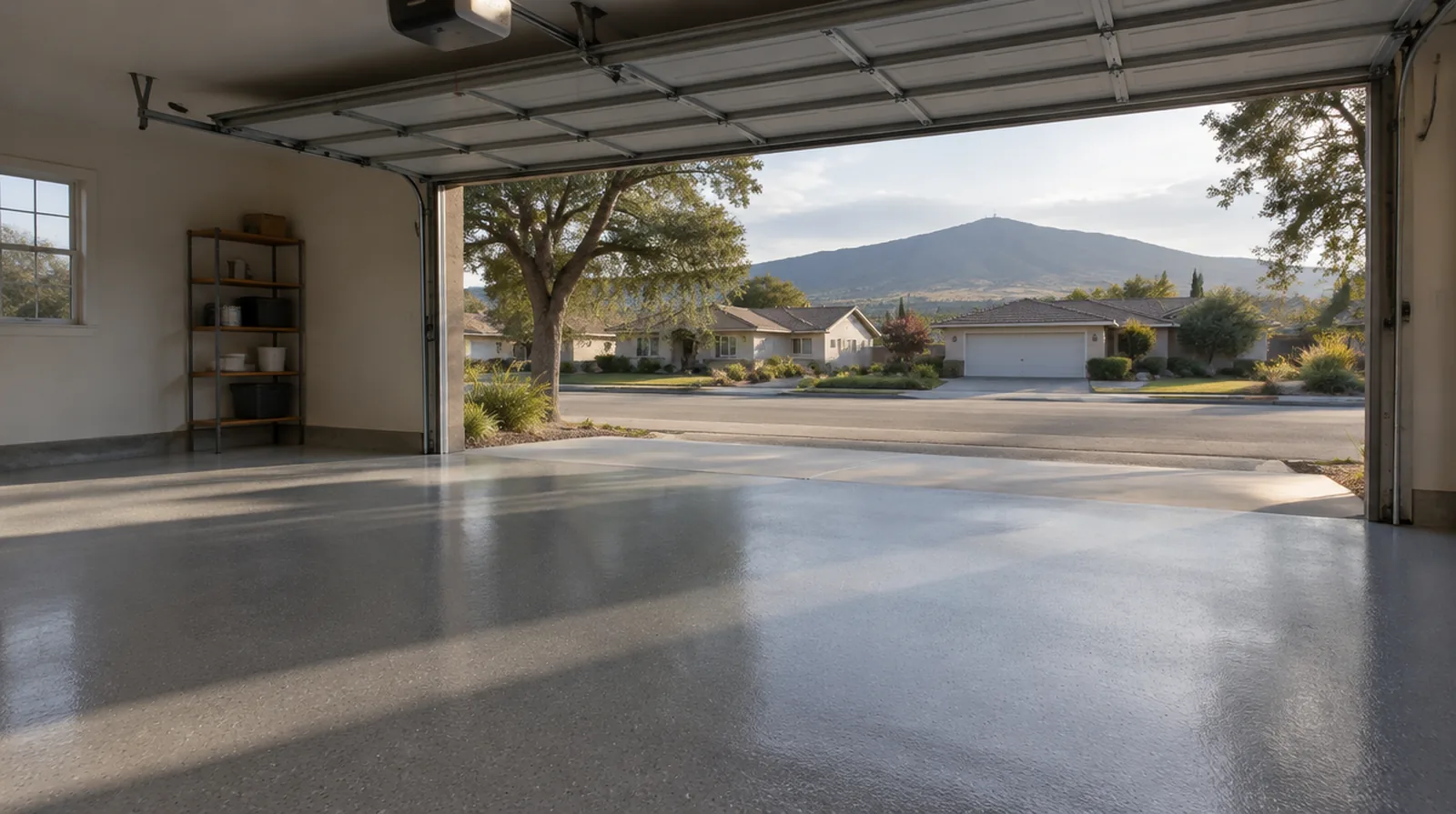
Grinding first
We remove the weak top layer of concrete with diamond grinders. That gives the epoxy a clean, open surface to grip.
Crack and slab prep
After grinding we fill cracks, patch spalled spots, and test the slab for moisture. Older garage slabs often have shrinkage cracks and pitted spots from years of hot tires and spilled fluids. If you want to see the full sequence before you get quotes, this guide to prepping a garage floor for a coating walks through each step of slab prep.
The coating
A primer, a pigmented epoxy base, an optional chip broadcast and a UV-stable topcoat. The topcoat matters a lot in Concord: west-facing garages get strong afternoon sun.
Hot tire pickup
Cheap coatings soften under hot tires after a summer drive and peel. A properly bonded, fully cured system resists that.
When can I park?
After about a week.
Will the floor be slippery?
We add texture as needed.
Garage floor epoxy for Concord homes
Garage floor epoxy in Concord has to handle heat, hot tires and the dust and leaves that blow in during dry months. We start with grinding to open the concrete, repair cracks and joints, then build a system with a primer, color or flake and a UV-stable clear top. That top layer resists yellowing and helps the floor hold up to tires that come in hot from a summer drive.
Older homes, older slabs
Many Concord homes were built in the 1950s through the 1970s. Their garage slabs often have old paint, oil stains and patched cracks. We grind those off and repair the slab before coating.
Questions about garage floors
Do I need to empty the garage? Yes, the floor must be clear.
Can you coat just part of the garage? Yes, though most people do the whole floor for a uniform look.
Is it worth doing before selling? Many sellers find a clean, coated garage helps buyers see the space as move-in ready.
Install day, hour by hour
The crew arrives, tapes off walls and grinds the slab. Cracks are filled and ground flush, the floor is vacuumed, and primer goes down. Color or flake follows, then the clear top once the base is ready. We leave with clear instructions on when you can walk, park and move things back.
Garages that hold a second fridge, pool gear and everything else
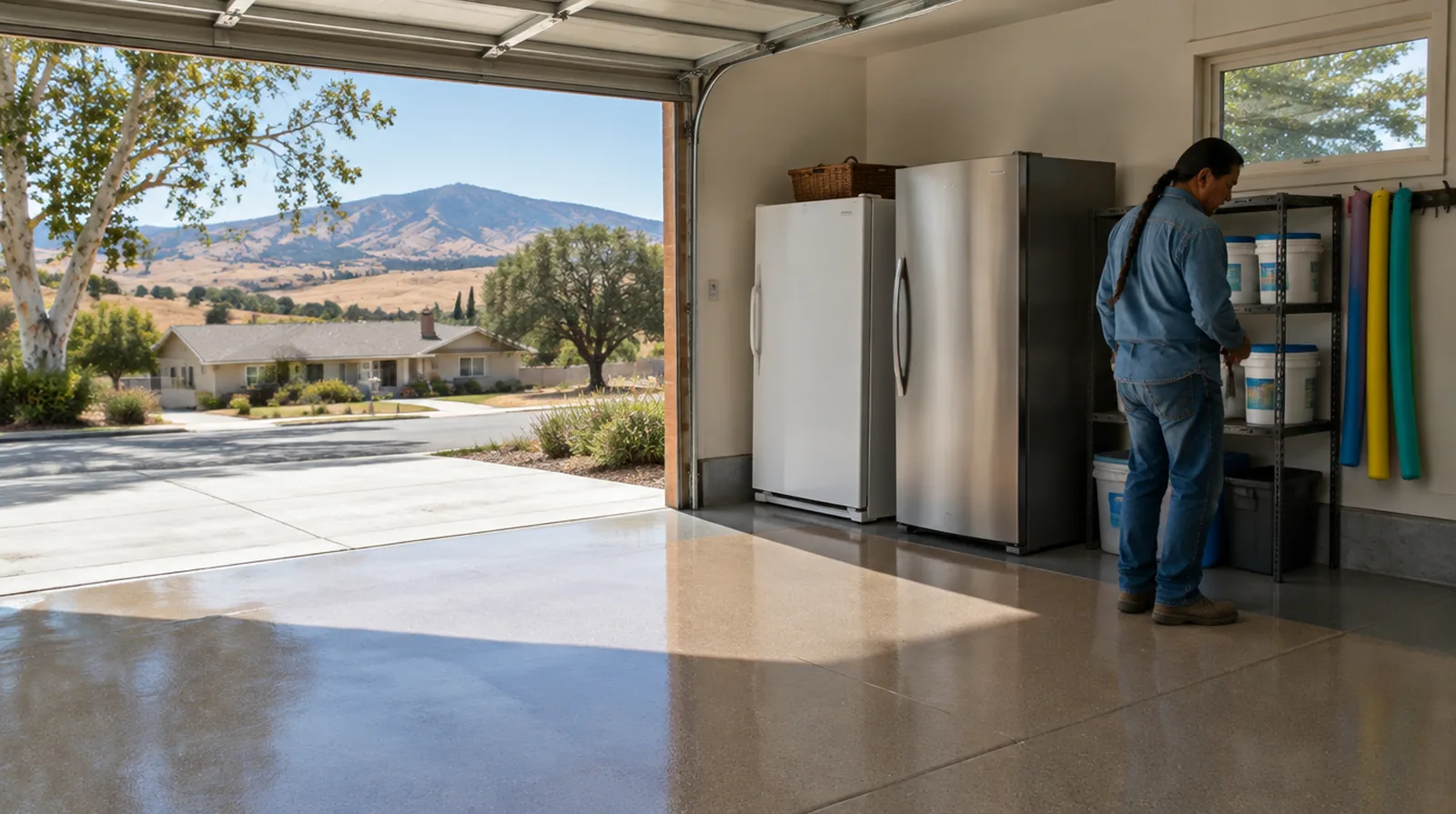
In a typical Concord ranch home, the garage is the household's overflow room. There is a second refrigerator full of drinks for the summer, a chest freezer, shelves of pool chemicals and floats, the lawn equipment and often a workbench. Those items sit in fixed spots for years, and the floor underneath them takes condensation drips, chemical splashes and the weight of appliances.
We plan the epoxy system with those spots in mind. Under refrigerators and freezers, a fully coated floor keeps condensation from soaking into the slab and leaving dark rings. Near pool supplies, a chemical-resistant topcoat protects against chlorine and acid spills. Along the workbench, a slightly heavier build handles dropped tools.
Moving appliances back
Once the floor has cured, appliances can go back. We suggest sliding them on cardboard or plywood rather than dragging them, and adding pads under narrow metal feet to protect the topcoat.
Heat and hot tires
After a summer drive on Highway 4 or Interstate 680, tires can be very hot when they pull into the garage. Cheap coatings soften under that heat and lift where the tires rest. A properly ground slab and a full epoxy build stay bonded and resist hot tire pickup.
Color choices
Tan, light gray and warm beige blends stay cooler in a sunny garage and hide dust from the dry hills. Darker colors look sharp but show dust and warm up more in direct sun.
Garage floor question
Can pool chemicals damage the coating? Spills should be wiped up promptly, but a chemical-resistant topcoat handles occasional contact far better than bare concrete.
Do you coat the step into the house? Yes. The step face and tread can be coated to match the floor.
Get a garage quote
Call (925) 414-8786.