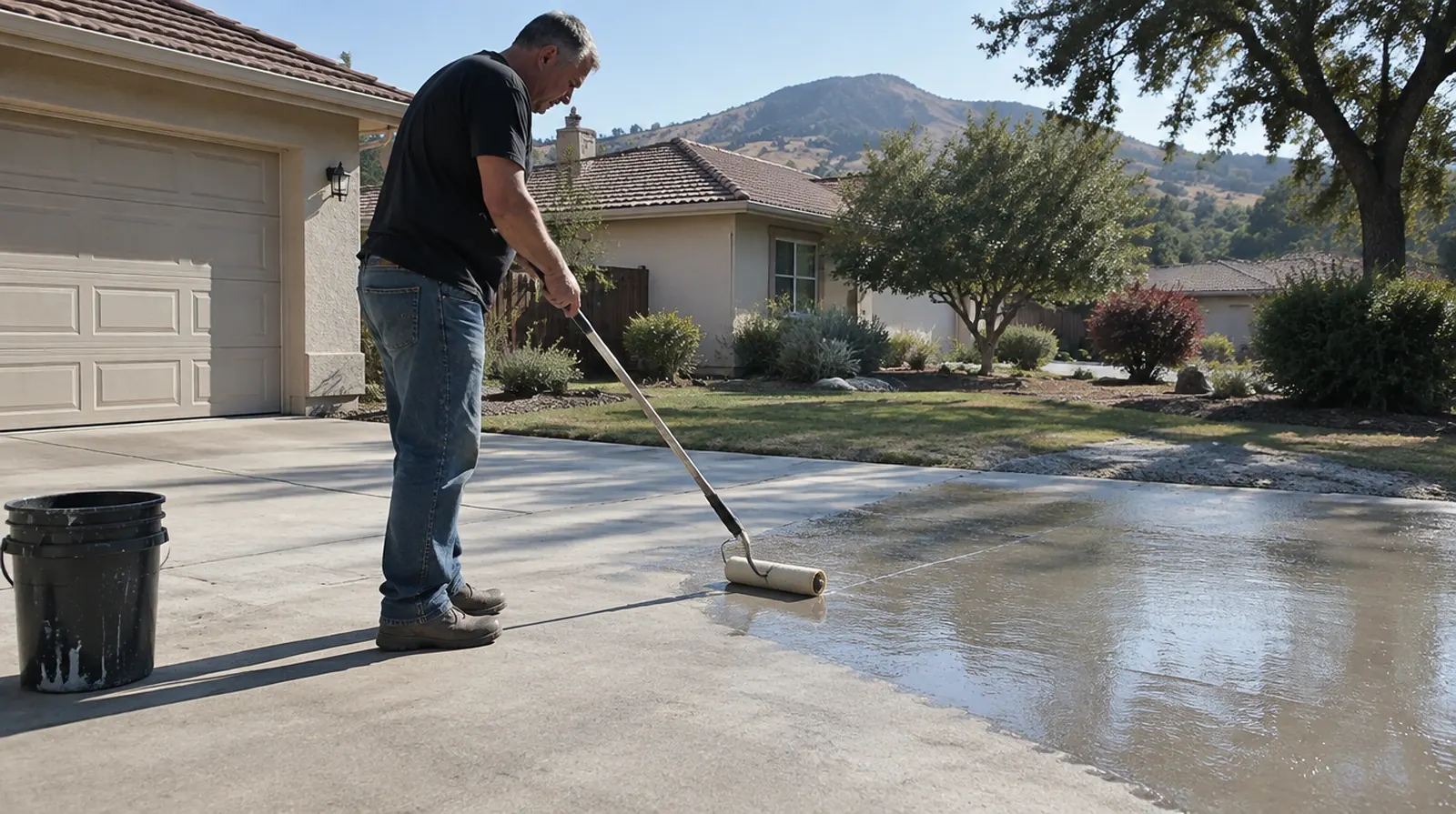
Pool decks and patios
Sun and sprinkler water fade and stain outdoor concrete. Sealer helps it last.
Driveways
Oil stains and tire marks clean up more easily on sealed concrete.
Process
Pressure wash, treat stains, dry and seal.
How often?
Every two to three years.
Will it change the color?
Some sealers darken slightly.
Lifted slabs and gaps
Clay soil can tip patio sections and open gaps. We fill joints with flexible sealant so water does not get under the slab and make it worse.
Hard water spots
Sprinklers leave white mineral spots on concrete. Cleaning and sealing make them easier to wipe off.
Pool decks that get hot
Many Concord backyards have pools, and summer decks get hot and chalky. A sealer slows fading and staining from chlorine and sunscreen. We recommend a penetrating product that keeps traction for bare feet instead of a glossy film that gets slick.
Concrete sealing in Concord's sun and clay
Concord's long, hot summers bake driveways, patios and pool decks, fading color and opening up the surface. Winter rains then push water and dirt into the concrete, and clay soil shifts slabs over time. Concrete sealing in Concord helps protect against stains, water and sun damage so your outdoor concrete looks better and lasts longer.
What we seal most often
Pool decks are a big one, because sun, chlorine and splashing water wear them down quickly. Driveways that collect oil and brake dust, stamped patios that are losing color, and front walkways are close behind.
Questions about sealing
Will sealer make my pool deck hot? Penetrating sealers do not change surface temperature much. Some film sealers can feel warmer, so we choose carefully for decks.
Can you fix lifted slabs? Sealing will not level them, but we can fill gaps and seal joints to keep water out.
How often should I reseal? Every few years in full sun.
Our process
We clean, treat stains, let the concrete dry, then apply sealer in even coats. Early mornings work best in summer.
Hard water rings and sprinkler stains
Concord's water is hard, and sprinklers that overspray onto walkways leave white mineral rings. We clean those off before sealing, and a sealed surface makes new spots much easier to wipe away. Adjusting sprinkler heads helps too, and we will mention it if we see heavy overspray.
Stamped patio refresh
A tinted reseal can revive faded stamped patios.
Sealing pool decks and patios in the Diablo Valley sun
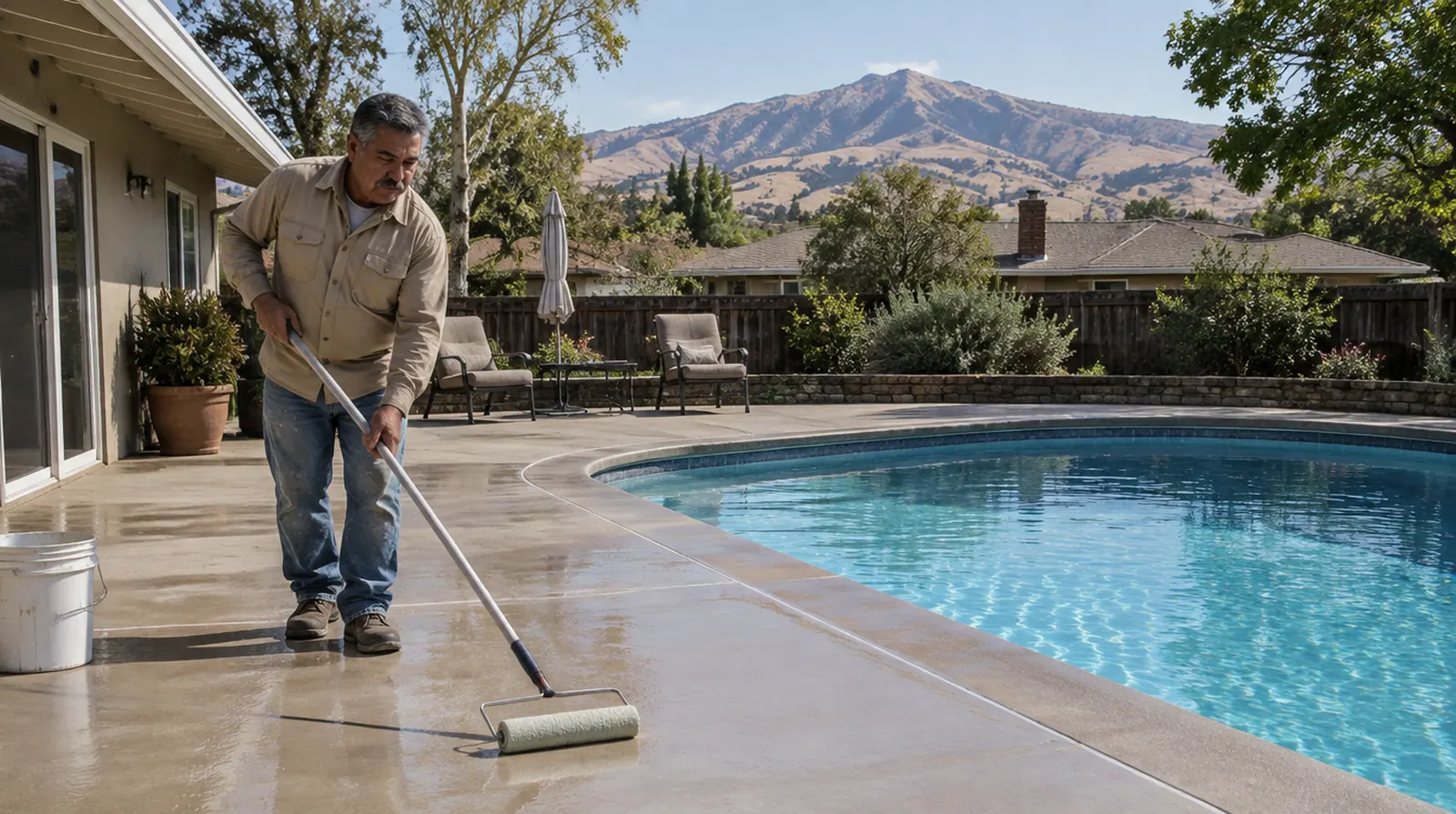
Backyard pools are a big part of summer in Concord, and the concrete decks around them take a lot of abuse. Intense sun, chlorinated splash water, sunscreen, and the occasional dropped drink all work on the surface. Without protection, decks fade, stain and begin to wear rough. A good sealer helps the concrete resist water and stains while keeping it comfortable and safe to walk on.
We start with a thorough cleaning to remove dirt, algae, old flaking sealer and mineral deposits. After the concrete dries, sealer is applied evenly with a sprayer or roller. On pool decks we choose products that keep good traction when wet and do not get excessively hot in direct sun.
Patios, walkways and driveways
The same care applies to patios, walkways and driveways. Sealed concrete resists oil stains, leaf tannins and dust from dry hills, and it rinses clean with a hose.
Expansive clay and outdoor slabs
Outdoor slabs on clay soil can crack as the ground shifts. Sealing does not stop movement, but filling cracks and sealing the surface helps keep water out, which slows further damage.
Sealing question
When is the best time to seal a pool deck? Spring, before pool season, or early fall. We avoid the hottest weeks of summer.
Will sealer make my deck slippery? We use products and additives designed for wet areas to keep traction.
How often should a pool deck be resealed? Every few years for most penetrating products. Heavy sun and splash may shorten that.
Can you seal around pool coping and tile? Yes. We mask the coping and waterline tile and keep sealer off those surfaces.
Seal your concrete
Call (925) 414-8786.