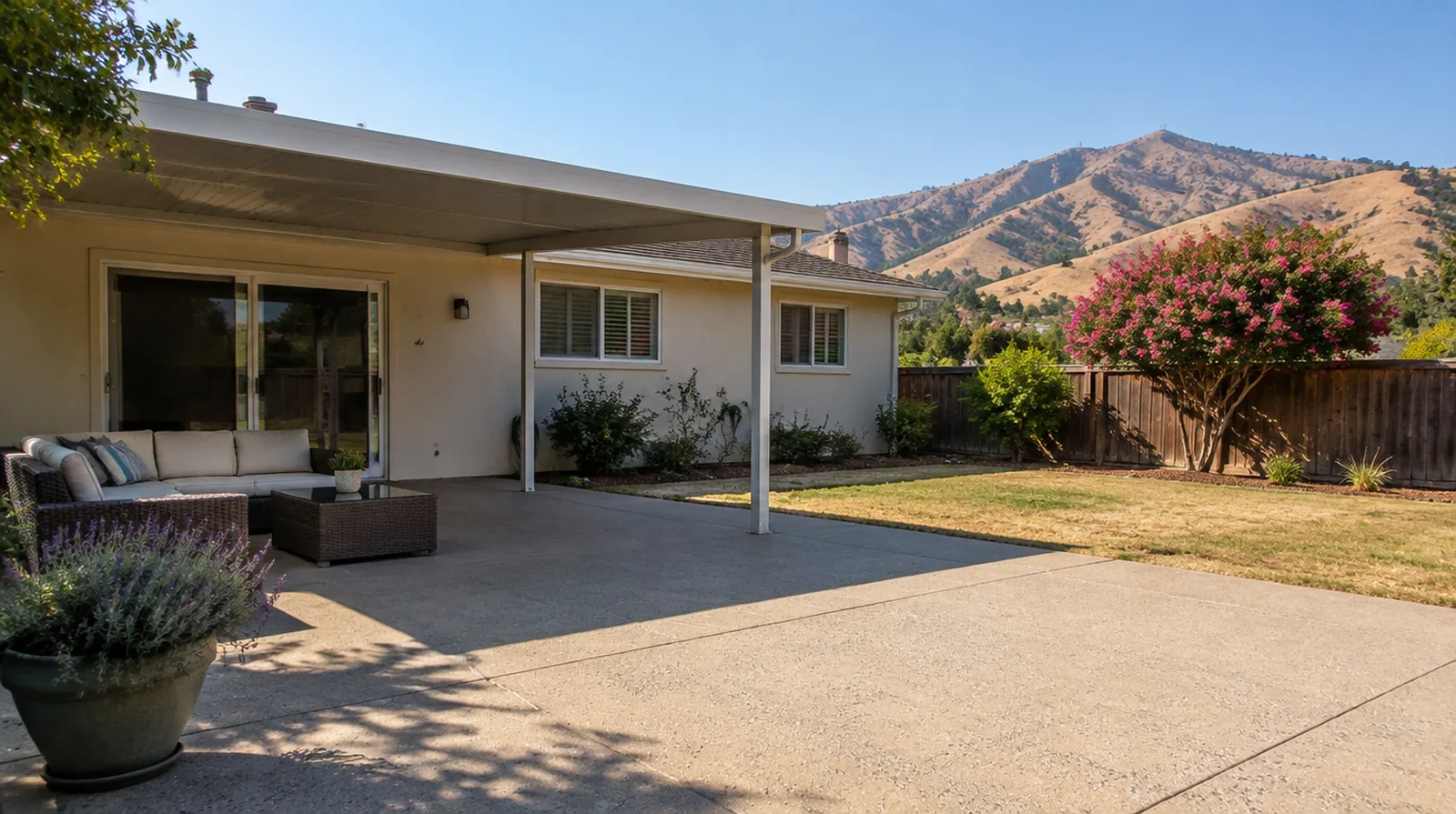
Concord patios and the Diablo Valley
Much of Concord was built in the postwar boom, and neighborhoods from the streets around Todos Santos Plaza to Dana Estates, Sun Terra and the blocks along Ygnacio Valley Road are full of single-story ranch homes with a slab patio out back. Many of those patios are original. Others were added later under an aluminum or wood patio cover. After decades of use, they tend to show the same problems: hairline cracks, faded or peeling paint, oil spots from the grill and rough patches where the surface has worn.
The valley's weather shapes how we coat them. Summers are long, dry and hot, with strong sun from May into October. Winters are mild but bring most of the year's rain in a few months. The soil in much of Concord is clay that swells when wet and shrinks in drought, so slabs shift a little every year.
Heat comes first
On a July afternoon, dark concrete can get hot enough to make bare feet miserable. We steer most Concord homeowners toward lighter colors: sand, light gray, warm beige and blended flakes with plenty of light chips. A textured finish also feels cooler and gives better grip than a smooth one. If you have a pool, our pool deck coating uses a cool-deck style texture made for wet, bare feet.
How we coat a patio
- Assess. We check for movement, settled sections and the slope away from the house. We also look at what is on the surface now: paint, old sealer or nothing.
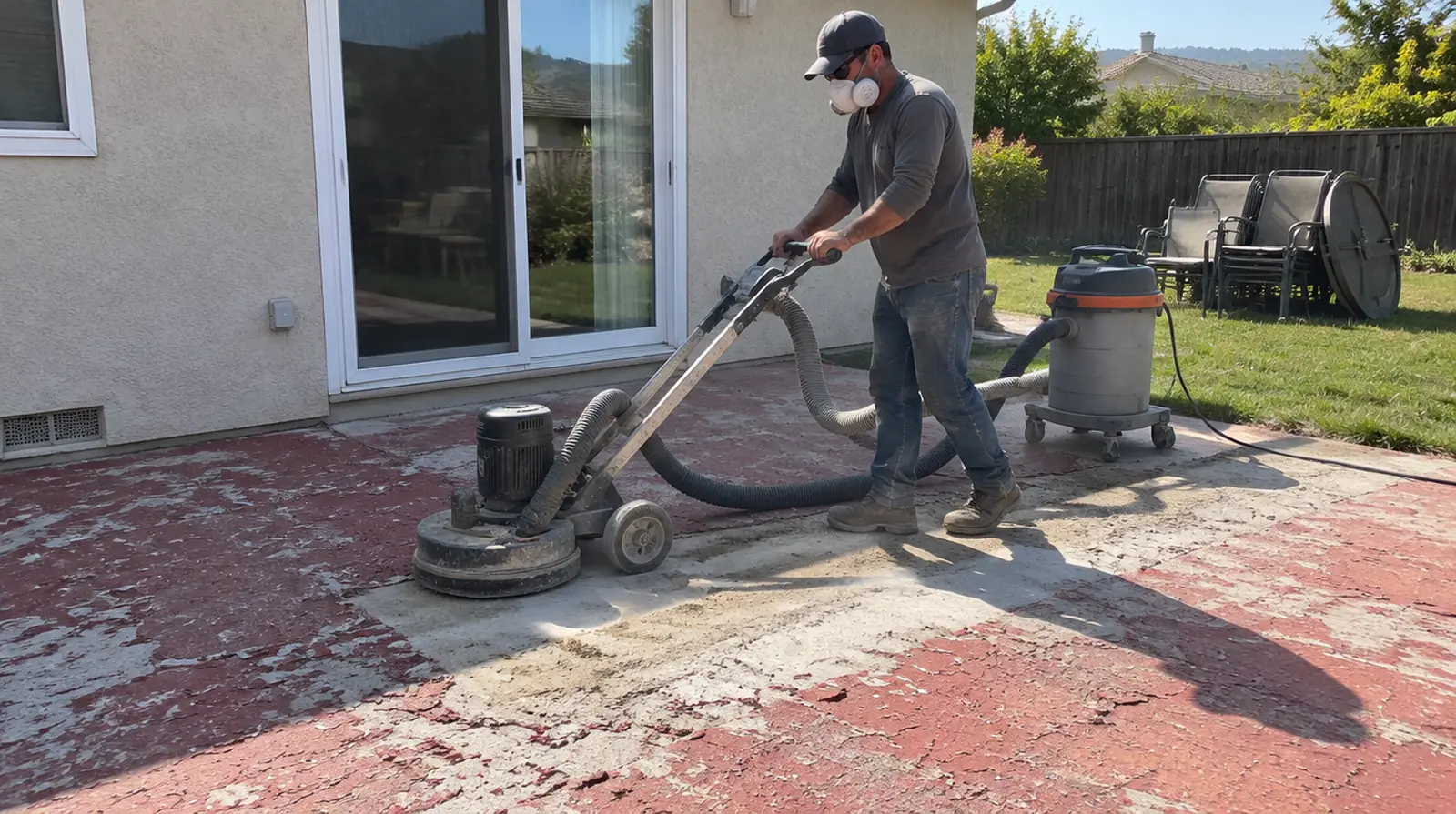
- Remove old finishes. Peeling porch paint and failed sealers have to go. Grinding takes them off and leaves a clean, open surface.
- Repair. Cracks and pits are filled. Stable cracks disappear under the finish; active cracks get a flexible filler.
- Coat. A base coat, a texture or flake broadcast, and a UV-stable clear topcoat go down in sequence.
- Cure. Most patios handle foot traffic the next day and furniture within about two days.
Covered patios and garage-side slabs
Patio covers keep the sun off but trap dust and leaves, and the slab under them often stays cooler and damper in winter. We check moisture before coating covered areas. Side-yard slabs next to the garage are another common job, often used for trash bins, bikes and storage. A tough flake finish handles those well and matches the main patio.
Why not just paint it?
Porch and patio paint sits on top of the concrete and peels as soon as moisture gets under it or the slab shifts. That is why so many older Concord patios have patchy paint. A coating system is bonded into a ground surface and built to flex with small movements. It costs more than a can of paint but lasts far longer and does not need scraping every few years. If an older coating has already failed, our epoxy floor repair crew can remove it first.
When to schedule
The dry season is the best time, and spring and fall are especially comfortable for curing. In midsummer we start early so we are done before the slab heats up. During the rainy months we can still work in a dry spell, but we keep an eye on storms coming over the hills.
Caring for a coated patio
Sweep, hose it off and use mild soap for spills. Place pads under heavy furniture and planters, and do not let sprinkler overspray soak the same spot all summer, because hard water can leave white spots. Clear outdoor sealing is an option for concrete you want to keep plain.
Common questions
Can you match my pool deck? Yes, we can coordinate colors and textures between the patio and the deck.
Will the coating crack if the clay moves? Small seasonal movement is fine. Large shifts that crack the concrete itself can show through, and we will point out any sections that look like they are still moving.
How long does a patio coating last? With normal care, many outdoor systems last well over a decade, and the clear topcoat can be refreshed when it starts to dull.
Do you work in nearby cities? Yes, including Clayton, Pleasant Hill, Walnut Creek, Martinez and Pittsburg.
Get a patio coating quote
Call (925) 414-8786. We will look at the slab, talk through colors and send a written quote.